
ALUMINUM
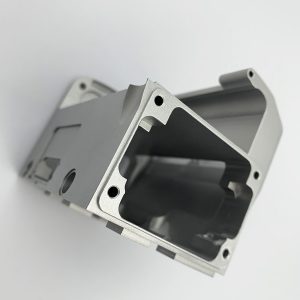
Aluminum is a vital raw element in the industrial sector. Due to its comparatively low hardness and high thermal expansion coefficient, it deforms readily when machined into thin-walled and thin-plate components. In addition to increasing the tool’s performance and removing the internal tension of the material in advance, various procedures may be performed to minimize the material deformation.
1. Symmetrical machining
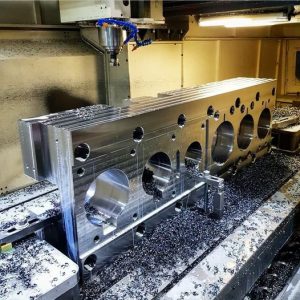
It is vital to avoid excessive heat concentration to improve heat dispersion and prevent thermal deformation in aluminum components with a wide processing allowance. For maximum heat dissipation and flatness control, using the symmetrical processing procedure on both sides is recommended. This allows each surface to be treated at least twice until the desired final size is reached.
2. Stratified multiple machining
Due to the unbalanced stress, multiple cavities on aluminum alloy plate components make it simple for the cavity wall to twist. Using various layered processing techniques to process all holes simultaneously is the optimal solution to the issue.
Instead of completing the portion all at once, it may be separated into many layers and processed to the desired size. The force exerted on the components will be more uniform, and the likelihood of deformation will decrease.
3. Select an acceptable cutting parameter
Choosing the optimal cutting settings may minimize cutting force and resulting cutting heat. In mechanical processing, if the cutting parameters are more significant than usual, the excessive cutting force will result, which may easily result in the deformation of the components and impact the spindle’s stiffness and the tool’s longevity.
The amount of back cutting depth significantly affects the cutting force of all the cutting parameters. However, although lowering the number of cutting tools to prevent deformed components is advantageous, the processing efficiency will be diminished.
Aluminum CNC machining’s high-speed milling may resolve this issue. By decreasing the back cutting depth, increasing the feed rate, and raising the machine’s speed, machining may lower the cutting force and ensure processing efficiency.
4. optimize the performance of cutting tools
Cutting tools’ material and geometrical features significantly impact cutting force and cutting heat. Therefore, the precise selection of cutting tools and settings is crucial for minimizing the Aluminum machining distortion of items.
Geometric characteristics that might impact a tool’s performance:
Front angle
The blade’s sharp edge will deteriorate over time unless the front angle is appropriately set. Setting the front hook correctly may help limit cutting deformation, assure smooth chip removal, and decrease cutting force and temperature. Do not use the tool for a negative front angle.
Rear angle
The size of the rear angle directly impacts flank wear and the quality of the machined surface, and cutting thickness is a crucial element to consider when constructing the back pitch. Due to the high feed rate, significant cutting load, and high heat generated during rough milling, the tool must accommodate for heat dissipation. Therefore, the rear angle should be reduced. Sharp edges are necessary for precision milling to prevent friction between the flank, machined surface, and elastic deformation. In such situations, the back corner should be enlarged.
Helix angle
The helix angle should be as big as feasible to stabilize and decrease milling force.
Main deflection angle
Reducing the primary deflection angle effectively may minimize heat dissipation and lower the average temperature of the processing area.
Improve the condition of cutting implements
Reducing the number of milling cutter teeth may boost capacity, which is advantageous when working with aluminum alloy. Due to the characteristics of aluminum alloy, cutting deformation is more significant, and a big chip capacity is required.
The radius of the tank’s base should be increased, and the number of milling cutter teeth should be decreased. For example, two cutter teeth are used for milling cutters below 20 mm, and three are used for milling cutters between 30 and 60 mm to prevent the deformation of thin-walled aluminum alloy components due to chip blockage.
Precision-ground blade teeth
Before utilizing the new knives, use fine oil stones to remove burrs and small zigzag patterns from the front and back edges of the teeth. In this approach, cutting heat may be decreased, and so can cutting deformation. The cutting edge roughness of cutter teeth must be less than Ra=0.4um.
Strictly regulate tool wear
When tools get worn, the workpiece’s surface roughness, cutting temperature, and deformation increase. To avoid deformation, the temperature of the workpiece during cutting should not exceed 100 degrees. In addition to choosing tool materials with high resistance to wear, the tool wear standard should not exceed 0.2 mm; otherwise, nodule formation may occur.
5. Different approaches
Both rough cutting and finishing need distinct methods. Rough machining necessitates the removal of surplus material from the surface of the blank in the shortest amount of time and with the highest cutting speed, therefore generating the necessary geometric shape for finishing. Here, processing efficiency and the rate of material removal are emphasized.
Aluminum Prototype
As the cutting thickness of the cutter teeth drops from its maximum to zero, the machining hardening phenomena will be substantially minimized and the deformation of the components may be mitigated to some degree. However, finishing Aluminum CNC Prototype needs greater machining precision and surface quality. There should be an emphasis on milling quality.
6. Two-times compression of thin-walled parts
Clamping force may induce deformation when CNC machining thin-walled aluminum alloy components. If all conditions are met, the compression force should be able to retain the workpiece without allowing it to loosen. This process needs an expert operator, yet it may decrease the deformation of machined components.
7. Drilling and milling
The machining of cavity-containing items has its unique challenges. If the milling cutter is applied directly to components, the cuts will not be smooth owing to the milling cutter’s inadequate debris space. This results in the buildup of a substantial quantity of cutting heat, the expansion and deformation of components, and even the possible fracture of the part or knife.
We have extensive expertise in Aluminum CNC milling and various metals and plastics for prototypes and production. We hope the information provided is helpful. Please get in touch with our staff if you need more manufacturing recommendations.