
UYEE’s GUIDE TO CNC MACHINING
CNC machines are machines that are used to aid in automating various other machines; we came full circle with this statement; kind of like using paint to make a painting of paint. Jokes apart, there are a lot of machines such as welders, grinders, lathe machines, laser cutters, stamping machines, etc. that require human intervention but can very easily make do without them. The same manual labor could be applied elsewhere in order to increase efficiency and productivity if we think from the industry point of view. It is to make this exact vision come true that CNC machines were introduced.
The CNC machining technology in itself is made up of quite a significant number of components that are run through a central CAM/CAD code. Once the CNC manufacturing department has the programming, the raw material required by the customer is searched and entered into the machine, and it is left working according to the program introduced. Throughout the process, the technician supervises the work.
After CNC machining we obtain a preliminary piece, on which our technicians work applying a process of cleaning and demurring. Once cleaned and polished, the technicians check the prototype again in case there is a problem. A metal prototype of a CNC machine takes digitized data as its input, a CAM program that controls, automates and monitors it.
HOW DOES CNC MACHINING WORK
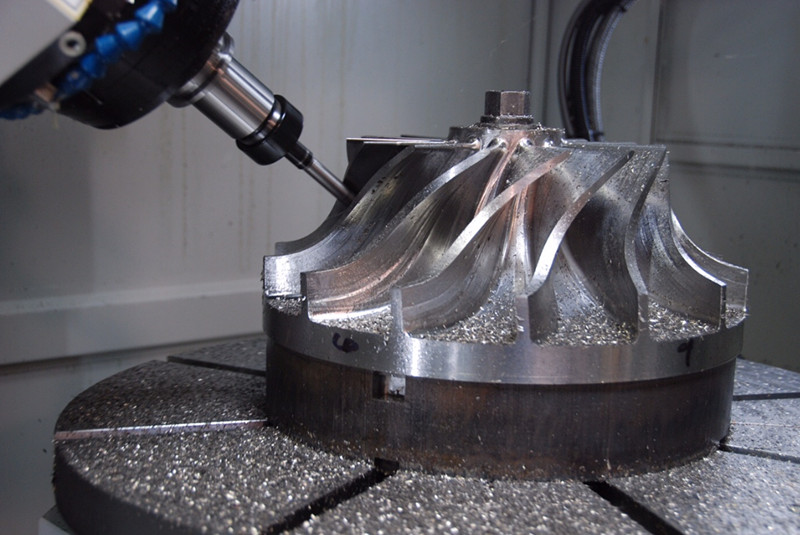
The design of CNC machines is not standardized or laid out that manufacturers can follow. Depending upon the type of work and the need, a CNC machine can have various axes of movement. The most common one and one of the most powerful machines is one that works on 5-axis machining for it enables the machining of the most complex parts that mechanical engineering has ever witnessed. It is so potent that it can even come up with parts used in the aeronautical industry.
CNC machines work upon these axes of theirs to ensure high precision component production by constantly cutting, shredding, interpolating the input material as per the underlying code.
BENEFITS OF CNC MACHINING
 Learn how CNC machining best fits into the product development lifecycle and when you might consider making the switch from other fabrication processes like 3D printing, rapid casting.
There is no limit to the applications of CNC machining services. Where traditional methods take considerably larger amounts of time and still the possibility of coming up with imprecise goods is a possibility, CNC machining completely eradicates those intricacies. Traditionally, 3 axis CNC machines were designed to work in the 3D space of planes x, y and z. Adding rotary motion to two of these axes improves capability and precision, reclassifying the equipment as 5 axis CNC machining. This development allows for more sophisticated components to be created with incredible precision and accuracy, along with the additional benefits of a reduced machine setting time, it can repeat the exact same design over and over again with the same level of detail and precision every single time. This makes CNC machining essential for scalability, higher process efficiency and improved final surface finish.
The precision CNC machining technology these days is so high that they find themselves being used in a ton of industries such as aerospace, military, publishing, transportation, firearms, automation, construction, etc. and there have to be a set of reasons that can justify their intensive usage in such core industries. Let us explore some of them.
- They are insanely precise and can come up with some really accurate welding and fabrication components and even highly precise metal components.
- They are machines. They don’t need to rest or have a break. They can work round the clock all the while delivering precise components.
- Uniformity in the finished goods is another benefit that CNC machines offer with themselves.
- The collective cost as compared to the result of CNC machines is damn too high than what traditional methods would offer.
CNC machines can be used for all of the same manufacturing and fabrication purposes as conventional machines. Though one is automated and the other is manual, both methods work to machine a starting material into a desired size and shape. CNC machining can be a good choice over conventional machining for just about any manufacturing and CNC machining can enhance your ability to make the exact products requested by clients and to meet high levels of product demand, even highly precise metal components.
Low Volume Manufacturing
Although CNC machines are capable of mass-producing goods, there are some instances where even with their level of precision and perfection, CNC machines have to highlight low volume manufacturing & prototyping to ensure even higher levels of precision to the finished goods. This happens in instances where the scope of compromising with the quality of the products is just out of the question and has the potential to cause a great deal of damage both money as well as human-life wise such. The aerospace industry is one such instance that brings justice to the aforementioned statement.
RESOURCE BOX
The quality and precision of CNC machines are what the work and flow of a ton of industries depend on. Without quality machines, they can literally come to a standstill. It is in situations like these that major manufacturers such as UYEE rise to the occasion to ensure the smooth running of the world.