Home/CNC Machining Technology

Machining vs. Casting Decision Depends on Quantities Request

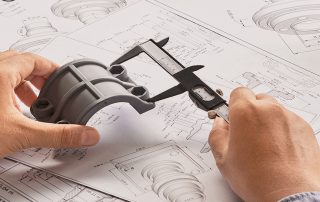
The decision between casting and machining mainly depends on the design of the part. Let’s understand the difference between the processes in very simple language. In casting, molten metal is poured into a mould to shape components; in machining, material is removed from a solid billet to create the desired shape. Precision, efficiency, and complexity go hand in hand in today's advanced production environment. Traditional machining techniques often fail to provide the necessary intricacy and accuracy as industries push the limits of design and performance. This is the point at which 5-axis CNC machining becomes revolutionary. 5-axis manufacturing has [...]
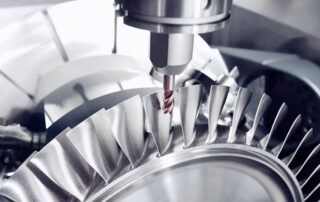
The Guide of CNC Machining: Understanding Its Impact on Surface Finish and Manufacturing Efficiency

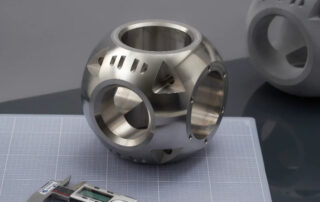
A crucial procedure in contemporary production is CNC machining, or computer numerical control machining. Machine tools like lathes, mills, and routers are controlled by computer programs. This technique enables the production of parts with excellent reproducibility and accuracy. Numerous industries, including the automotive, aerospace, and medical sectors, employ CNC machining for everything from simple parts to intricate shapes. By guaranteeing steady, regulated, and smooth cutting conditions, CNC machining enhances surface finish. Simultaneously, automation, speed, and uniformity boost industrial efficiency. It can produce high-quality parts quickly and affordably with the correct set of equipment, settings, and programming. This article describes [...]

5-Axis Manufacturing: Precision CNC Machining for Complex Parts

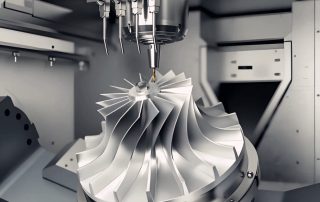
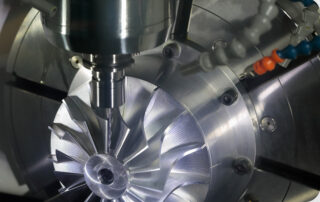
Industries like aerospace, automotive, and medical need high precision and smooth finishes. Traditional machining methods are often not enough for such work, while modern manufacturing involves complex and detailed parts. This is where 5-axis CNC machining becomes important. Because the machine can easily handle intricate geometries and complex curves, engineers are no longer constrained by flat surfaces or simple shapes. This frees designers from worrying about manufacturing constraints to concentrate more on functionality and performance. For example, parts can be made lighter by eliminating extra material without sacrificing strength, which is crucial in sectors like aircraft. Additionally, 5-axis machining [...]

Product Development Process: Understanding the Importance From Concept to Prototype

Innovation is now necessary in today's fast-paced business environment. The product development process influences how well an idea becomes a workable solution, whether you're a startup creating your first MVP or an established business introducing a new product line. The transition from concept to prototype, where actual engineering meets creative vision, is one of the most important stages of this process. Organizations can lower risks, enhance product-market fit, shorten time-to-market, and produce goods that genuinely address client issues by comprehending this approach. This blog delves into every phase of the product development process, emphasizing the importance of the concept-to-prototype [...]

Comprehensive Understanding: The Impact of AI in Mechanical Engineering

Mechanical engineering is not an exception to how artificial intelligence (AI) is changing industries worldwide. Mechanical engineering is currently embracing a new era of intelligent automation, predictive analytics, and data-driven innovation, after previously being solely reliant on manual design, prototyping, and manufacturing. AI is now the engine powering more intelligent product design, effective maintenance, sophisticated production processes, and environmentally friendly engineering techniques. It is reinventing how engineers think, create, and work, not merely streamlining current procedures. This blog offers a thorough grasp of how artificial intelligence (AI) is changing mechanical engineering, including its applications in robotics, design, modeling, manufacturing, [...]

Why is Titanium a great option for the Aerospace part

One of the world's most challenging technical settings is found in the aircraft sector. Components of aeroplanes and spacecraft must be lightweight enough to endure harsh temperatures, abrupt pressure fluctuations, severe mechanical stress, and corrosive environments. Choosing the appropriate material is a crucial safety and performance issue that goes beyond simple design. Titanium has become one of the most valuable and dependable materials among the numerous others utilized in aerospace manufacturing. Titanium is a remarkable material for aircraft components because of its outstanding strength, low weight, resistance to corrosion, and thermal stability. This article examines the reasons for titanium's [...]

The Impact of Automation Will Power the Next Generation of CNC Machining

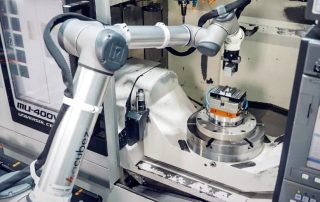
CNC machining has been one of the most accurate and dependable manufacturing techniques for a long time. It has powered consumer items, industrial machinery, healthcare, automotive, and aerospace for decades. However, automation is the primary driver of the significant evolution that CNC machining is currently experiencing. CNC machining is being transformed by automation from a proficient manual process into an advanced, clever, and incredibly effective production system. The next generation of CNC machining will be faster, more accurate, and more economical than ever before thanks to smart robots, AI-driven programming, automated tool changeover, real-time monitoring, and predictive maintenance. The [...]

Nickel CNC Machining: Operations, Machinability & Applications

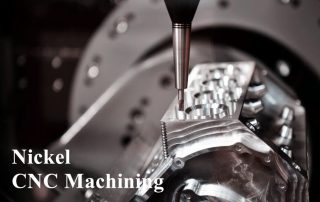
One of the most precious metal utilized in precision engineering is nickel and its alloys. The aerospace, oil and gas, nuclear, and chemical processing sectors rely heavily on nickel alloys because of its exceptional corrosion resistance, high-temperature strength, and toughness. However, the process of machining nickel alloys is not simple. They are challenging to cut due to their hardness, work-hardening properties, and limited heat conductivity; this calls for sophisticated CNC methods, specialized equipment, and well-thought-out machining plans. This blog provides a thorough grasp of how contemporary manufacturing overcomes the difficulties posed by these difficult metals by examining the procedures, [...]

Lean Manufacturing in the Production Processes of CNC Machining and 3D Printing

Lean manufacturing is a methodical framework for the elimination of waste from a manufacturing system, or value stream, without compromising productivity.  When we talk about lean manufacturing, the first name that comes to everyone’s mind is Toyota. It was the first to introduce lean manufacturing, which has since become a fundamental component of contemporary production methodologies. In conjunction with state-of-the-art technologies such as 3D printing and CNC machining, Lean principles can unleash unparalleled levels of sustainability, customization, and efficiency. In this blog, we will tell you about the integration of Lean manufacturing into CNC machining and 3D printing, the [...]

Do You Know What Industries Use CNC Machining Parts?

The fast-paced industrial landscape of today cannot allow negotiation of precision, speed, or efficiency. Here is where CNC machining finds application—turning simple materials into incredibly intricate and exact components in many different fields. For everything from one-off prototypes to mass-produced parts, by automating manufacture using computer-guided tools, CNC machining assures unparalleled accuracy, reproducibility, and scalability. Still, have you ever given any thought to which industries most rely on CNC manufacturing? From aerospace to healthcare, from automotive to renewable energy, from aircraft to CNC-machined components, they assist in producing the goods and infrastructure that run our modern society. Every sector [...]