Prototyping in product development enables engineers and designers to transform concepts into functional products. However, expecting a prototype to function exactly like the final product can be a mistake. In reality, manufacturing processes introduce variations that can significantly affect a product’s performance, reliability, and quality. By understanding and planning for these manufacturing variations during the prototyping stage, companies can reduce redesign cycles, minimize production risks, and ensure a smoother transition to large-scale manufacturing. Here, the real question is how to do this?
Below, we will explain how businesses can efficiently prototype while taking manufacturing variances into consideration.
What are Manufacturing Variations in Production?
Before we start, let’s understand what manufacturing variation is. In common terms, it refers to the natural differences that occur during production due to limitations in machinery, materials, human handling, and environmental conditions. Even with highly precise equipment, it is impossible to produce every part the same. Minor variations in dimensions, material properties, or assembly processes are inevitable.
For example, injection-moulded plastic parts may shrink slightly as they cool, metal components may have small dimensional deviations due to machining tolerances, and electronic components may exhibit slight differences in their electrical characteristics. While these variations may appear insignificant individually, they can accumulate and affect the overall performance of a product.
Ignoring these variations during prototyping can lead to unrealistic assumptions. A prototype built with perfect dimensions or handcrafted precision may perform well, but the product may not function the same way once mass production begins. Therefore, prototyping should aim to replicate real-world manufacturing conditions as closely as possible.
Consider Tolerances When Designing
Tolerances specify the permissible range of variation in the dimensions or characteristics of a part. Teams can assess whether minor variations impact the functionality of the product by creating prototypes with reasonable tolerances. Additionally, tolerance analysis aids in determining areas where variation is permitted and crucial dimensions that must remain exact. This method guarantees that the design is resilient and able to deal with manufacturing irregularities without sacrificing functionality.
For example, engineers can define a component dimension as 50 mm ± 0.2 mm rather than precisely 50 mm. This implies that even if the part’s size varies significantly within that range, it will still operate as intended.
Employ Manufacturing-Equivalent Procedures
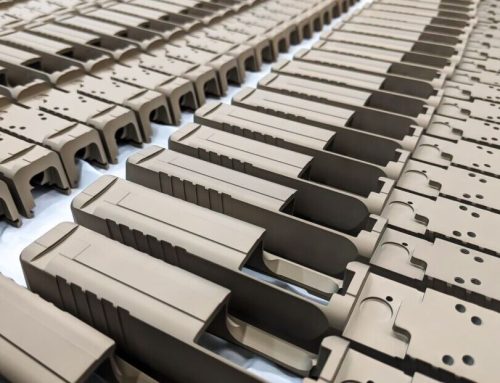
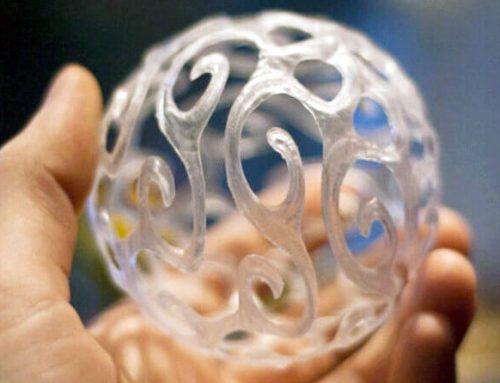
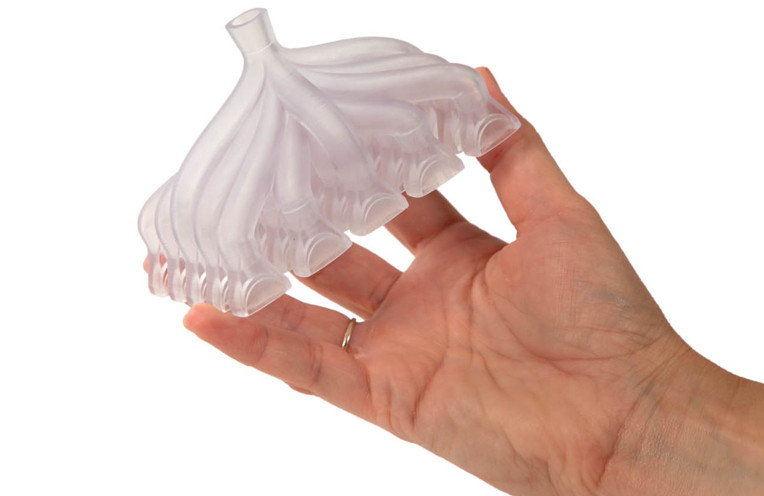
Using manufacturing procedures that closely mimic the desired production process during prototyping is another crucial tactic. Due to their speed and affordability, many early prototypes are constructed utilising techniques like 3D printing or hand machining.
For instance, variations in material density, strength, and surface polish may cause a 3D-printed plastic part to perform differently from an injection-moulded version.
Later-stage prototypes should, whenever feasible, be made using the same or comparable manufacturing processes intended for mass production. Before large-scale production starts, this aids in identifying problems with shrinkage, warping, tool marks, or assembly fit.
Create Several Variants of the Prototype
Companies should think about producing several variations that reflect several potential production results rather than just one prototype. These modifications purposefully contain small material or dimensional changes that are within allowable tolerance boundaries.
For instance, a mechanical assembly might work flawlessly with the right dimensions, but it would be challenging to put together if the pieces were a little bit bigger or smaller.
Engineers can assess if a design is resilient enough to withstand manufacturing variance by analysing several prototypes. Before investing in pricey production equipment, they can improve the design if issues emerge.
Review Design for Manufacturability (DFM)
Design engineers, manufacturing engineers, and suppliers work together on DFM evaluations during the prototyping phase. These conversations aid in identifying possible problems like tight tolerances, intricate designs, or materials that are challenging to process reliably.
For instance, a design may require two components to be precisely aligned. Even if parts differ little, manufacturing experts may suggest adding alignment features like chamfers, slots, or guiding pins to make assembly easier.
Conduct Environmental and Stress Testing.
Prototypes should therefore go through extensive testing to guarantee dependability. Load testing, vibration testing, heat cycling, and humidity exposure are examples of stress testing. These tests assist in determining whether differences in the characteristics of the material or the quality of the assembly could cause an early failure.
Heat dissipation, for example, may be impacted by component diversity in electronic equipment. Prototypes are tested at high temperatures to make sure the design can withstand the worst-case situations. Organizations can verify that the product is still dependable in spite of manufacturing variations by replicating real-world settings.
Simulation of Worst-Case Situations
Worst-case scenario analysis is a common tool used by engineers to assess how a product would perform when several variations happen at once. This method is predicated on the idea that specific parameters or dimensions have reached their maximum or minimum tolerance limits. Even though these situations might not frequently occur in production, examining them aids in guaranteeing that the design continues to operate even in the most trying circumstances. In order to improve robustness, designers can modify tolerances or redesign components if the product fails worst-case testing.
Work Closely with Suppliers.
Engage the supplier in the early stage of the prototype to ensure important information about manufacturing restrictions, material behaviour, and feasible tolerances. Suppliers could suggest different materials, tweaks to the process, or changes to the design to lower variability. Improved alignment between design requirements and manufacturing capabilities is ensured by cultivating strong connections with suppliers.
Refine and Iterate the Prototype
The process of rapid prototyping is intrinsically iterative. Every prototype offers important information about possible alterations, manufacturing feasibility, and design performance. Teams should continuously improve the design based on testing findings and manufacturing input rather than viewing prototypes as final versions. The design develops over time into a more reliable, mass-producible product that operates consistently.
Conclusion
Organizations can create products that are dependable even in the face of inherent production variations by designing with tolerances, employing production-like manufacturing techniques, creating several prototype variations, carrying out manufacturability reviews, and thorough testing. Businesses that use this strategy eventually increase productivity and customer satisfaction in addition to lowering development risks.