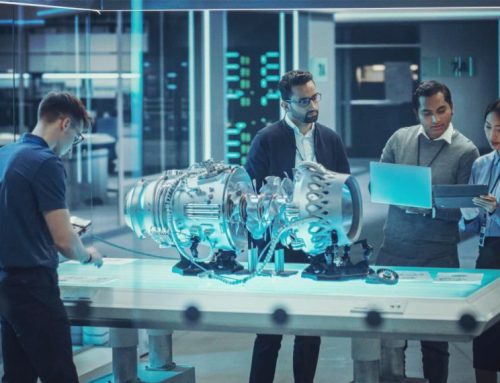
The decision between casting and machining mainly depends on the design of the part. Let’s understand the difference between the processes in very simple language. In casting, molten metal is poured into a mould to shape components; in machining, material is removed from a solid billet to create the desired shape. Precision, efficiency, and complexity go hand in hand in today’s advanced production environment. Traditional machining techniques often fail to provide the necessary intricacy and accuracy as industries push the limits of design and performance. This is the point at which 5-axis CNC machining becomes revolutionary.
5-axis manufacturing has become a mainstay in industries including aerospace, medical devices, automotive, and defence because of its unparalleled precision in producing extremely complicated geometries.
What exactly is 5-Axis CNC Machining?
A cutting tool that operates simultaneously over five separate axes ( X, Y, Z, A, B) is referred to as 5-axis CNC (Computer Numerical Control) machining. 5-axis machining adds two more rotational axes in contrast to conventional 3-axis machining, which works along the X, Y, and Z axes. The cutting tool can approach the workpiece from almost any direction thanks to these additional movements.
The two typical setups consist of:
3+2 Axis (Positional 5-Axis): Three axes of machining are carried out while the workpiece is positioned at a fixed angle.
Simultaneous 5-Axis: This allows for the development of extremely complex and organic structures because all five axes move simultaneously.
This adaptability greatly improves the capacity to produce intricate parts using a single setup.
The Significance of 5-Axis Manufacturing
Manufacturers need ways to shorten manufacturing times without sacrificing quality as product designs become more complex.
These requirements are met by 5-axis machining, which provides:
- Improved Accuracy and Precision
Alignment errors are less likely when fewer preparations are needed. Tighter tolerances and better surface finishes are ensured by the cutting tool’s excellent contact with the surface.
- Capacity to Construct Complicated Geometries
Parts with deep cavities, undercuts, curved surfaces, and complex shapes are excellent candidates for 5-axis machining. For sectors like aerospace, where parts frequently have intricate aerodynamic designs, this skill is essential.
- Shorter Setup Time
Multiple setups and workpiece repositioning may be necessary for traditional machining. 5-axis machining increases productivity and lowers labour costs by completing the majority of tasks in a single configuration.
- Extended Tool Life
Wear and tear are reduced by letting the tool approach the material at ideal angles. Longer tool life and lower tooling expenses result from this.
- Excellent Surface Coating
Smoother finishes are produced by maintaining a constant tool orientation, which frequently eliminates the need for additional finishing procedures.
Important Uses for 5-Axis Machining
5-axis CNC machining is essential in many different industries due to its versatility:
Extreme precision and lightweight designs are required for aerospace components. Turbine blades, impellers, and structural parts with intricate geometries are frequently made using 5-axis machining.
Medical Equipment
The medical industry uses 5-axis machining to create highly detailed, biocompatible components with tight tolerances, from surgical tools to orthopaedic implants.
Automobile
5-axis machining is utilized in the automotive industry to make moulds, prototypes, and engine parts. It makes it possible for producers to innovate more quickly while upholding strict performance requirements.
Military and Defense
Strong and accurate components are needed for defence applications. The creation of sophisticated machinery with intricate geometries and exacting quality standards is supported by 5-axis machining.
Sector of Energy
5-axis machining is used to create turbine parts, valves, and other crucial components that need to be precise and long-lasting in sectors like oil and gas and renewable energy.
Benefits Compared to Conventional Machining
Although 3-axis machining is still appropriate for simpler objects, 5-axis machining has several clear benefits:
Single Setup Efficiency: Saves time and minimizes errors.
Increased Design Freedom: Allows engineers to create without limitations.
Increased Productivity: Quicker, less interrupted machining cycles.
Long-Term Cost Savings: Lower labour, tooling, and setup expenses make up for the larger initial expenditure.
5-Axis Manufacturing Difficulties
5-axis machining has several drawbacks despite its many advantages:
High initial outlay of funds
Compared to conventional CNC machines, 5-axis machines and the software that goes with them are substantially more costly.
Complicated Programming
Advanced programming abilities and knowledge of CAM (Computer-Aided Manufacturing) software are necessary to operate a 5-axis machine.
The Need for a Skilled Workforce
To fully utilize 5-axis machining, highly skilled engineers and operators are necessary.
Upkeep and Adjustment
To preserve accuracy and performance, this equipment needs to be calibrated precisely and maintained on a regular basis.
Advanced Software’s Function in 5-Axis Machining
Sophisticated CAM software is essential to modern 5-axis machining. These resources aid in:
- Tool path simulation to avoid clashes
- Optimizing cutting techniques
- Cutting down on machining time
- Increasing overall effectiveness
Real-time monitoring systems and digital twins are increasingly becoming essential, enabling manufacturers to anticipate problems and boost output.
5-Axis CNC Machining’s Future
Thanks to developments in automation, artificial intelligence, and smart manufacturing, 5-axis manufacturing appears to have a bright future. Among the new trends are:
Industry 4.0 Integration
5-axis machines are being integrated into networked ecosystems by smart factories, which let machines to interact and optimize processes on their own.
Enhanced Automation
Unattended machining is made possible by robotic integration, which also decreases human interference and boosts productivity.
Manufacturing in Hybrid Form
Even more design freedom and material efficiency are possible when 5-axis machining and additive manufacturing (3D printing) are combined.
Improved Materials Capability
5-axis machining will keep developing to handle sophisticated polymers, composites, and superalloys as new materials are created.
When Is 5-Axis Machining the Best Option?
- The component contains complicated features or a complex shape.
- Tight tolerances and high precision are essential.
- Better surface polish is a must.
- Time savings and production efficiency are top concerns.
However, conventional machining techniques might still be more economical for basic pieces.
Conclusion
5-axis CNC machining will continue to be at the forefront of manufacturing technology, propelling advancement, enhancing performance, and expanding the boundaries of precise engineering as industries continue to develop and require increasingly complex components. Precision engineering has advanced significantly with 5-axis production. It has revolutionized the capabilities of contemporary machining by making it possible to produce intricate pieces with remarkable accuracy and efficiency. The long-term advantages in terms of productivity, quality, and design flexibility make it a reasonable option for sophisticated manufacturing demands, even though the initial investment and expertise requirements may be expensive.